
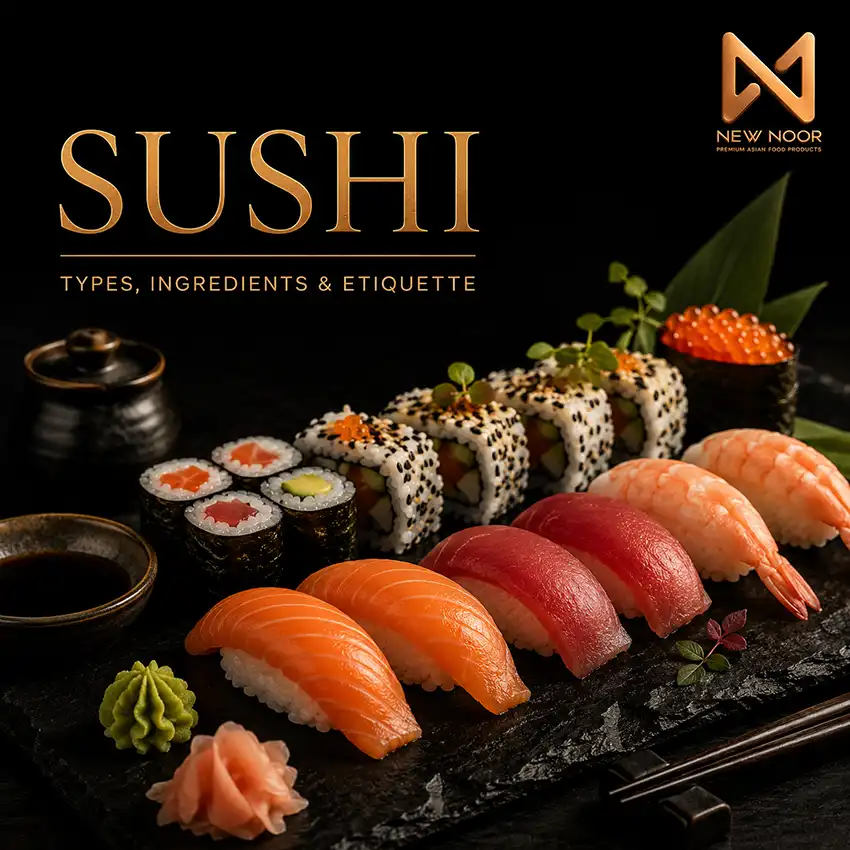
Sushi is one of the most recognisable foods associated with Japan, yet it is also
one of the most frequently misunderstood.
Many people use the word sushi to mean raw fish. In reality, the defining element
of sushi is seasoned, vinegared rice. The rice may be paired with raw seafood,
cooked seafood, vegetables, egg, tofu or other ingredients and presented in many
different forms.
This means that sushi can be raw or cooked, simple or elaborate, traditional or
modern. It can appear as a hand-shaped piece of rice topped with fish, a seaweed
roll, a rice bowl, a pressed block or a tofu pocket filled with seasoned rice.
This guide explains what sushi actually is, how it developed, the main styles,
the importance of sushi rice, common ingredients, eating etiquette, food-safety
considerations and the difference between sushi and sashimi.
Quick overview: Sushi is a Japanese food centred on
vinegared rice. Raw fish may be included, but it is not required.
Sashimi is sliced raw seafood served without sushi rice and is therefore
not technically sushi.
What Does Sushi Mean?
Sushi refers to rice that has been prepared with vinegar and commonly seasoned
with salt and a small amount of sugar. This seasoned rice is often called
shari or sushi-meshi.
The rice is then combined with a topping or filling known as
neta. Neta may include:
- Raw fish
- Cooked seafood
- Shellfish
- Egg omelette
- Vegetables
- Pickled ingredients
- Tofu
- Seaweed
This is why a cucumber roll, an egg-topped nigiri and a piece of salmon nigiri
can all be considered sushi, even though only one may contain raw fish.
The balance of the rice is central to the final result. Its texture, temperature,
vinegar level, sweetness, saltiness and firmness all influence how the topping
is experienced.
A Brief History of Sushi
The earliest forms of sushi were connected with preserving fish through salt
and fermented rice. In older preparations, the rice could be discarded after
fermentation while the preserved fish was eaten.
Over time, people began eating the rice together with the fish. Faster forms of
sushi developed using vinegared rice rather than relying entirely on a long
fermentation process.
During the Edo period in present-day Tokyo, nigiri-style sushi became popular as
a convenient food. Small mounds of seasoned rice were topped with prepared fish,
seafood, egg or other ingredients and served as an accessible street food.
As sushi spread across Japan, regional ingredients and preservation methods led
to many local forms, including pressed sushi, fermented sushi, rolled sushi and
rice bowls topped with seafood or vegetables.
Is Sushi Always Made With Raw Fish?
No. Sushi is defined by its seasoned rice, not by raw fish.
Many traditional and modern varieties use ingredients that are cooked, grilled,
simmered, pickled or entirely plant-based.
Examples of Cooked Sushi Ingredients
- Cooked prawns
- Grilled eel
- Crab or crab-style fillings
- Japanese omelette
- Seared salmon or tuna
- Cooked mushrooms
- Simmered vegetables
- Fried tofu pockets
Examples of Plant-Based Sushi Ingredients
- Cucumber
- Avocado
- Pickled radish
- Asparagus
- Carrot
- Shiitake mushrooms
- Salted plum paste
- Perilla leaves
- Tofu
People who do not eat raw seafood can therefore still explore a wide range of
sushi styles.
Sushi and Sashimi: What Is the Difference?
Sushi and sashimi are often served in the same restaurants, but they are not the
same food.
Sushi
Sushi includes seasoned, vinegared rice. It may contain raw fish, cooked seafood,
vegetables, egg or other ingredients.
Sashimi
Sashimi consists of carefully sliced raw fish or seafood served without sushi rice.
It may be accompanied by soy sauce, wasabi, shredded radish or other garnishes.
| Food | Vinegared Rice | Raw Seafood Required |
|---|---|---|
| Sushi | Yes | No |
| Sashimi | No | Usually yes |
Main Types of Sushi
Sushi appears in many regional and international forms. The following styles are
among the most widely recognised.
Nigiri
Nigiri consists of a small hand-shaped mound of sushi rice with a topping placed
over it.
Common toppings include:
- Tuna
- Salmon
- Prawn
- Squid
- Eel
- Scallop
- Japanese omelette
A small amount of wasabi may already be placed between the rice and topping,
depending on the restaurant and the ingredient.
Maki
Maki is rolled sushi. Rice and fillings are arranged on a sheet of nori and
shaped with a bamboo rolling mat before being cut into pieces.
Maki may be thin and simple or thick and filled with several ingredients.
Uramaki
Uramaki is an inside-out roll. The rice appears on the outside while the nori
surrounds the filling inside.
This style is especially common outside Japan and is used for rolls such as the
California roll.
Temaki
Temaki is hand-rolled into a cone shape. A sheet of nori holds rice and fillings,
with the ingredients visible at the open end.
It is normally eaten by hand and is best served soon after preparation so the
nori remains crisp.
Gunkan
Gunkan consists of a mound of rice wrapped around the sides with a strip of nori.
The top forms a small space that can hold softer ingredients that would not sit
securely on nigiri.
Common toppings include:
- Salmon roe
- Flying-fish roe
- Sea urchin
- Chopped seafood mixtures
- Vegetable or tofu-based salads
Chirashi
Chirashi is a bowl or plate of sushi rice topped with a variety of seafood,
vegetables, egg and garnishes.
Unlike maki, the ingredients are arranged over the rice rather than rolled inside
nori.
Oshizushi
Oshizushi is pressed sushi. Rice and toppings are placed in a mould, compressed
and then cut into neat pieces.
This style is particularly associated with regional traditions in western Japan.
Inari
Inari sushi consists of seasoned rice placed inside a sweet and savoury fried tofu
pocket.
It normally contains no raw seafood and can be suitable for vegetarian or vegan
diets when the seasonings and fillings contain no animal-derived ingredients.
Narezushi
Narezushi is a fermented style connected with the earliest history of sushi.
It differs considerably from the fresh nigiri and rolls familiar to many
international diners.
Essential Sushi Ingredients
Sushi may look simple, but the final result depends heavily on ingredient quality,
preparation and balance.
Sushi Rice
Japanese short- or medium-grain rice is commonly used because its texture allows
the grains to hold together without becoming a paste.
After cooking, the rice is seasoned with sushi vinegar while still warm and then
cooled carefully. The objective is to maintain distinct grains with enough
cohesion to hold their shape.
Rice Vinegar
Rice vinegar provides the characteristic acidity of sushi rice. It is usually
combined with salt and sugar, although recipes vary by region, chef and intended
topping.
Nori
Nori is dried seaweed used for maki, temaki and gunkan. Good nori should be crisp,
aromatic and strong enough to hold rice and fillings without becoming tough.
Fish and Seafood
Depending on the style, sushi can use raw, cured, cooked, grilled, simmered or
seared seafood.
Species, cut, fat content, freshness, freezing history, storage and handling all
affect suitability.
Vegetables and Pickles
Cucumber, avocado, pickled radish, mushrooms, carrots and leafy herbs can provide
texture, acidity and colour.
Soy Sauce
Soy sauce adds saltiness and savoury flavour. It should be used in controlled
amounts so that it does not overpower the rice and topping.
Wasabi
Wasabi contributes heat and aroma. In traditional nigiri, the chef may already
place an appropriate amount between the rice and topping.
Pickled Ginger
Pickled ginger, often called gari, is commonly eaten between different pieces of
sushi to refresh the palate. It is not normally intended to be placed on top of
every piece.
Why Sushi Rice Matters
High-quality seafood cannot compensate for poorly prepared sushi rice.
The rice influences every bite and acts as the foundation connecting the topping,
seasoning and texture.
Important qualities include:
- Grains that remain distinct
- Enough stickiness to hold the piece together
- A balanced vinegar flavour
- Controlled sweetness and saltiness
- A texture suited to the topping
- An appropriate serving temperature
Rice that is too wet may collapse, while rice that is too dry can feel hard and
separate from the topping.
The amount of rice also matters. An oversized rice portion can dominate the fish,
while too little rice may create an unbalanced bite.
How to Eat Sushi
Sushi dining does not need to feel complicated. A few common practices can make
the experience more balanced and respectful.
Hands or Chopsticks?
Nigiri may be eaten with clean hands or chopsticks. Both approaches are accepted
in many sushi settings.
Sashimi is normally eaten with chopsticks.
Using Soy Sauce
When dipping nigiri, turn it gently so that the topping touches the soy sauce
rather than soaking the rice.
Sushi rice absorbs liquid quickly. Dipping the rice directly can cause the piece
to break apart and can introduce more soy sauce than intended.
Using Wasabi
Some nigiri is already seasoned with wasabi by the chef. Taste the piece before
adding more.
Practices vary between casual restaurants, conveyor-belt restaurants and formal
sushi counters. Following the style of the restaurant is more useful than treating
every etiquette rule as absolute.
Using Pickled Ginger
Eat a small amount of ginger between different types of sushi to refresh the palate.
It is generally not used as a topping for the sushi itself.
Chopstick Etiquette
- Do not pass food directly from one pair of chopsticks to another.
- Do not leave chopsticks standing upright in a bowl of rice.
- Place chopsticks on the provided rest when not in use.
- Avoid pointing at people or dishes with chopsticks.
Conveyor-Belt Sushi
At conveyor-belt restaurants, take a plate only when you intend to keep it.
A plate removed from the conveyor should not be placed back.
Vegetarian, Vegan and Cooked Sushi Options
Sushi can be adapted to many dietary preferences, but individual ingredients and
seasonings still need to be checked.
Vegetarian Options
- Cucumber maki
- Avocado rolls
- Japanese omelette nigiri
- Pickled radish rolls
- Mushroom sushi
- Inari sushi
Vegan Options
- Cucumber rolls
- Avocado rolls
- Pickled vegetable rolls
- Tofu-based sushi
- Mushroom nigiri
- Plant-based temaki
People following a vegan diet should confirm that the rice seasoning, sauces,
mayonnaise, soup stock and inari filling contain no fish stock, egg, honey or
other animal-derived ingredients.
Cooked Seafood Options
- Cooked prawn nigiri
- Grilled eel sushi
- Seared salmon
- Cooked crab rolls
- Tempura rolls
- Cooked scallop or seafood rolls
Raw Fish and Food Safety
Raw or undercooked seafood can carry harmful germs or parasites. Cooking seafood
thoroughly is the safest way to reduce the risk of foodborne illness.
Commercial freezing procedures may be used to control parasites in certain fish,
but freezing does not remove every harmful microorganism.
This means that safe sushi depends on more than visual freshness. It also requires:
- A reliable and documented supply chain
- Correct freezing procedures where required
- Continuous temperature control
- Clean preparation surfaces and utensils
- Prevention of cross-contamination
- Trained food handlers
- Appropriate refrigerated storage
Who Should Be More Cautious?
People at greater risk from foodborne illness are generally advised to avoid raw
or undercooked seafood. This includes:
- Pregnant individuals
- Young children
- Older adults
- People with weakened immune systems
- People receiving chemotherapy or immune-suppressing treatment
- People with certain chronic medical conditions
Cooked seafood, vegetable sushi and other fully cooked options may offer a safer
alternative, depending on individual dietary and medical requirements.
Food-safety note: A marketing description alone does not
prove that raw fish has been handled correctly. Restaurants and food businesses
should rely on supplier records, temperature control, traceability and applicable
food-safety regulations.
How to Choose Sushi Ingredients
Restaurants, retailers and food businesses should evaluate each sushi ingredient
according to its intended use, quality and storage requirements.
Sushi Rice
Look for rice with consistent grain size and a texture suitable for holding together
after cooking and seasoning.
Rice Vinegar
Compare acidity, sweetness and ingredient quality. Some products are pure rice
vinegar, while others are pre-seasoned sushi vinegar containing sugar and salt.
Nori
Review colour, aroma, crispness, thickness and packaging protection. Nori absorbs
moisture easily and should be stored in a dry, sealed environment.
Soy Sauce
Different soy sauces vary in saltiness, colour, fermentation style and flavour.
The most suitable option depends on the sushi menu and customer preference.
Wasabi
Products described as wasabi may contain different proportions of horseradish,
mustard and genuine wasabi. Ingredient transparency is important when authentic
flavour or menu accuracy matters.
Pickled Ginger
Check sweetness, acidity, colour additives, slice thickness and packaging size.
Products intended for restaurant service may differ from small retail packs.
Seafood
Confirm:
- Species
- Country of origin
- Harvest or production method
- Frozen or chilled status
- Required storage temperature
- Traceability documentation
- Raw-consumption suitability according to applicable regulations
Common Misunderstandings About Sushi
“Sushi Means Raw Fish”
Sushi is based on vinegared rice. It can contain raw fish, cooked seafood,
vegetables, egg or tofu.
“Sashimi Is a Type of Sushi”
Sashimi is raw seafood served without sushi rice. It is commonly served alongside
sushi but is not technically sushi.
“All Sushi Is Traditional Japanese Sushi”
Many international rolls were developed outside Japan. They may be inspired by
Japanese techniques without representing a traditional regional style.
“More Soy Sauce Creates More Flavour”
Excess soy sauce can overpower the rice and topping. Sushi is intended to balance
several subtle flavours.
“Pickled Ginger Belongs on Top of Sushi”
Ginger is commonly used between different pieces as a palate cleanser.
“Vegetarian Sushi Is Automatically Vegan”
Vegetarian sushi may contain egg, mayonnaise, fish-based stock, honey or other
animal-derived ingredients.
“Raw Fish That Looks Fresh Is Automatically Safe”
Appearance cannot confirm parasite control, temperature history or hygienic handling.
Reliable sourcing and documented food-safety procedures remain necessary.
Frequently Asked Questions
What Is the Most Important Ingredient in Sushi?
Every ingredient matters, but seasoned sushi rice is the defining foundation.
Without vinegared rice, raw sliced fish is sashimi rather than sushi.
Can Sushi Be Made Without Fish?
Yes. Sushi can use vegetables, mushrooms, tofu, pickles, avocado, egg and many
other ingredients.
Can Sushi Be Fully Cooked?
Yes. Cooked prawn, grilled eel, omelette, fried tofu and cooked vegetable sushi
are common examples.
What Is the Difference Between Maki and Uramaki?
Traditional maki usually has nori on the outside. Uramaki places the rice on the
outside and the nori around the filling.
Can Nigiri Be Eaten by Hand?
Yes. Nigiri may be eaten with clean hands or chopsticks.
Should Wasabi Be Mixed Into Soy Sauce?
Preferences and restaurant styles vary. In more traditional settings, the chef
may already season the sushi with wasabi. Taste the sushi first and use additional
seasoning carefully.
Is Sushi Safe During Pregnancy?
Pregnant individuals are generally advised to avoid raw or undercooked seafood
because of the higher risk from foodborne illness. Fully cooked and appropriately
handled alternatives may be more suitable, subject to professional medical advice.
Does Sushi Contain Gluten?
Sushi rice, fish and vegetables are naturally gluten-free, but some soy sauces,
marinades, imitation crab products, tempura and processed fillings can contain
wheat or gluten.
Does Sushi Contain Common Allergens?
Depending on the recipe, sushi may contain fish, shellfish, soya, sesame, egg,
wheat or other allergens. People with allergies should ask about ingredients
and cross-contact procedures.
Final Thoughts
Sushi is much broader than raw fish. Its identity begins with carefully prepared
vinegared rice and extends across hand-shaped nigiri, seaweed rolls, pressed sushi,
rice bowls, tofu pockets and many regional styles.
Understanding the role of rice, toppings, nori, soy sauce, wasabi and ginger makes
it easier to appreciate the balance behind the dish rather than treating sushi
as a collection of separate ingredients.
For food businesses, quality depends on both flavour and operational standards.
Ingredient origin, seafood handling, cold-chain management, traceability and
consistent preparation all affect the final customer experience.
New Noor is developing educational resources around Japanese, Asian and specialty
food categories. The objective is to help consumers, restaurants, retailers and
distributors better understand ingredients, product quality and sourcing decisions.
Food-safety disclaimer: This article is provided for general
educational purposes. Food businesses must follow applicable local regulations,
supplier requirements and approved food-safety procedures when storing,
preparing or serving raw seafood.
References
-
Japan National Tourism Organization — Sushi in Japan Guide
-
Ministry of Agriculture, Forestry and Fisheries of Japan — Nigiri Zushi
-
U.S. Food and Drug Administration — Selecting and Serving Seafood Safely
-
Centers for Disease Control and Prevention — About Anisakiasis
-
Centers for Disease Control and Prevention — Safer Food Choices