
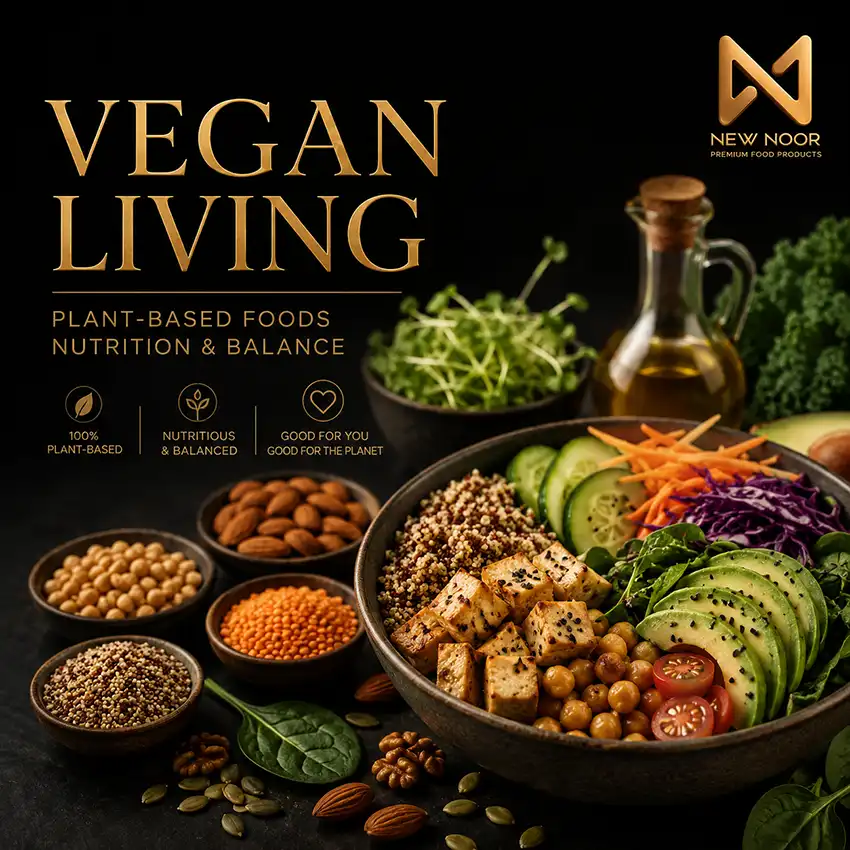
A vegan diet is based entirely on foods and ingredients that do not come from
animals. It can include vegetables, fruits, grains, legumes, nuts, seeds,
plant-based proteins and products made from these ingredients.
However, following a vegan diet involves more than removing meat, milk and eggs.
Food variety, protein quality, fortified products, nutrition labels and several
important nutrients all require careful consideration.
A product can be vegan without being especially nutritious, while a thoughtfully
planned vegan meal can provide a broad combination of protein, fibre, carbohydrates,
healthy fats, vitamins and minerals.
This guide explains what vegan means, how it differs from a general plant-based
diet, which foods are commonly included or avoided, how to build balanced meals
and which nutritional factors deserve particular attention.
Quick overview: A vegan diet excludes meat, poultry, fish,
seafood, dairy products, eggs and other animal-derived ingredients.
A varied eating pattern based on legumes, whole grains, vegetables, fruits,
nuts, seeds and appropriately fortified foods requires more planning than
simply replacing animal products with processed alternatives.
What Does Vegan Mean?
In dietary terms, vegan means avoiding foods and ingredients that are derived
entirely or partly from animals.
A vegan diet normally excludes:
- Red meat
- Poultry
- Fish and seafood
- Milk and dairy products
- Eggs
- Animal fats
- Gelatine
- Other animal-derived food ingredients
Many people who identify as vegan also apply the principle beyond food by avoiding
animal-derived clothing, cosmetics or products connected with animal exploitation.
This article focuses specifically on the dietary and food-selection aspects.
A vegan eating pattern can contain familiar whole foods, traditional regional
dishes and modern plant-based alternatives. It does not need to rely entirely on
specialty products.
Vegan Diet and Plant-Based Diet: Are They the Same?
The terms vegan and plant-based are often used
together, but they do not always communicate exactly the same thing.
Vegan Diet
A vegan diet excludes animal-derived foods and ingredients. The word may also
reflect ethical, environmental or lifestyle principles.
Plant-Based Diet
Plant-based usually describes an eating pattern focused mainly on foods from
plants. Depending on how the term is used, it may still include small quantities
of dairy, eggs, fish or meat.
| Term | Main Focus | Animal Products |
|---|---|---|
| Vegan | Excluding animal-derived foods and ingredients | Excluded |
| Plant-Based | Prioritising foods from plants | May or may not be included |
| Vegetarian | Excluding meat, poultry and fish | Dairy products or eggs may be included |
Because the term plant-based can be interpreted differently, buyers should still
check the ingredients and certification of a product when complete avoidance of
animal-derived ingredients is important.
What Foods Are Commonly Included in a Vegan Diet?
A balanced vegan eating pattern is built from several food groups rather than
depending on one type of food.
Vegetables
Vegetables contribute fibre, vitamins, minerals, colour, flavour and variety.
Using different colours and types can help broaden the nutritional profile of meals.
- Leafy greens
- Broccoli and cauliflower
- Carrots
- Peppers
- Courgette
- Aubergine
- Mushrooms
- Cabbage
- Tomatoes
- Fresh and frozen mixed vegetables
Fruits
- Berries
- Apples and pears
- Oranges and other citrus fruits
- Bananas
- Mangoes
- Grapes
- Dates
- Avocado
Legumes
Beans, lentils, chickpeas and peas are important because they can provide protein,
carbohydrates, fibre, iron and several other nutrients.
- Red and green lentils
- Chickpeas
- Black beans
- Kidney beans
- White beans
- Soya beans
- Green peas
Grains and Starchy Foods
- Rice
- Oats
- Quinoa
- Barley
- Bulgur
- Wholegrain bread
- Wholegrain pasta
- Potatoes and sweet potatoes
- Noodles made without animal-derived ingredients
Nuts and Seeds
- Almonds
- Walnuts
- Cashews
- Pistachios
- Chia seeds
- Flaxseeds
- Pumpkin seeds
- Sunflower seeds
- Sesame seeds and tahini
Plant-Based Protein Products
- Tofu
- Tempeh
- Edamame
- Seitan
- Soya mince
- Bean-based burgers
- Pea-protein products
- Unsweetened soya yoghurt
Plant-Based Drinks
- Soya drink
- Oat drink
- Almond drink
- Coconut drink
- Pea-protein drink
When a plant-based drink replaces dairy milk regularly, choosing an unsweetened
version fortified with nutrients such as calcium, vitamin D and vitamin B12 can
be more useful than selecting it only for flavour.
What Foods and Ingredients Are Avoided?
Some animal-derived ingredients are obvious, while others can appear in sweets,
sauces, baked goods, drinks and processed foods.
Common Animal-Derived Foods
- Beef, lamb, poultry and other meats
- Fish, shellfish and other seafood
- Milk, cheese, yoghurt, cream and butter
- Eggs and egg-based ingredients
- Animal fat, lard and tallow
- Gelatine
Ingredients That May Require Closer Checking
- Whey: a dairy-derived ingredient
- Casein and caseinates: proteins derived from milk
- Lactose: milk sugar
- Gelatine: commonly produced from animal collagen
- Carmine or cochineal: a red colour produced from insects
- Shellac: a glazing substance derived from insects
- Beeswax: sometimes used as a coating or glazing agent
- Fish sauce: used in some Asian sauces and seasonings
- Oyster sauce: traditionally made with oyster extracts
- Animal stock: may appear in soups, sauces and rice dishes
Honey is also generally excluded from a vegan diet because it is produced by bees.
Ingredient terminology can vary by country, manufacturer and product category.
Certification and direct information from the manufacturer can be useful when
the ingredient list is unclear.
How to Build a Balanced Vegan Meal
A plate containing only salad or only carbohydrates may be vegan, but it may not
provide a satisfying or nutritionally balanced meal.
A practical vegan meal can combine four main components:
1. A Protein Source
- Beans or lentils
- Chickpeas
- Tofu or tempeh
- Edamame
- Seitan
- Soya-based products
2. Vegetables
Use one or more types of vegetables, including leafy greens, colourful vegetables
or seasonal produce.
3. A Grain or Starchy Food
- Rice
- Quinoa
- Wholegrain bread
- Potato
- Wholegrain pasta
- Noodles
4. A Source of Healthy Fat
- Avocado
- Olive oil
- Tahini
- Nuts
- Seeds
- Unsweetened nut butter
The exact proportions depend on energy needs, lifestyle, medical circumstances
and personal preferences. Nutritional balance can be achieved across the day or
week rather than requiring every meal to look identical.
Where Does Protein Come From in a Vegan Diet?
Protein is found in many plant foods. The main challenge is not that plant protein
does not exist, but that meals need to contain sufficient quantities and variety.
Useful Vegan Protein Sources
| Food Group | Examples |
|---|---|
| Legumes | Lentils, chickpeas, kidney beans, black beans and peas |
| Soya foods | Tofu, tempeh, edamame, soya mince and soya drink |
| Grains | Quinoa, oats, wholegrain bread, brown rice and pasta |
| Nuts and seeds | Peanuts, almonds, pumpkin seeds, hemp seeds and tahini |
| Specialty proteins | Seitan, pea protein and bean-based products |
Eating a variety of plant proteins across the day helps provide different amino
acids. It is not normally necessary to combine specific proteins within every
single meal, but overall variety remains important.
People with greater protein requirements, including some athletes, older adults
or individuals recovering from illness, may benefit from professional guidance
to ensure that intake matches their needs.
Important Nutrients to Consider
A vegan diet can include a wide range of nutrients, but some require deliberate
planning because their natural sources are limited, their absorption differs or
commonly used animal foods have been removed.
Vitamin B12
Vitamin B12 is naturally found mainly in foods of animal origin. Unfortified plant
foods are not considered dependable sources.
Reliable vegan sources generally include:
- Foods specifically fortified with vitamin B12
- Fortified plant-based drinks
- Fortified breakfast cereals
- Fortified nutritional yeast
- An appropriate vitamin B12 supplement
The product label should be checked because not every plant drink, cereal or
nutritional yeast contains added B12.
Vitamin B12 deserves particular attention because inadequate intake can affect
red blood cells and the nervous system. Anyone uncertain about intake, symptoms
or supplementation should speak with a qualified healthcare professional.
Iron
Plant foods contain non-haem iron, which is not absorbed in exactly the same way
as the haem iron found in animal foods.
Vegan iron sources include:
- Lentils
- Beans
- Chickpeas
- Tofu
- Fortified cereals
- Pumpkin seeds
- Cashews
- Quinoa
- Dark leafy vegetables
Eating vitamin C-rich foods with an iron-containing meal may support the absorption
of non-haem iron.
Examples include:
- Lentils with peppers or tomatoes
- Beans with citrus dressing
- Fortified cereal with berries
- Tofu with broccoli
Calcium
Removing dairy products also removes a common source of calcium, so suitable
replacements need to be chosen deliberately.
Potential vegan sources include:
- Calcium-fortified plant drinks
- Calcium-set tofu
- Fortified plant-based yoghurt
- Tahini
- Almonds
- Kale and selected green vegetables
- Fortified foods
Fortification varies considerably. Checking the nutrition label is more reliable
than assuming all plant-based alternatives contain calcium.
Vitamin D
Very few foods naturally contain substantial vitamin D. Sources can include
fortified foods, supplements and vitamin D produced by the body through appropriate
sun exposure.
Vegan products may contain vitamin D2 or vegan-sourced vitamin D3. The ingredient
and certification information should be checked if the source matters to the buyer.
Vitamin D needs can vary according to age, skin exposure, location, season and
individual health. Professional advice may be appropriate where deficiency is
suspected.
Iodine
Iodine contributes to normal thyroid function. Dairy products and seafood are
important sources in many mixed diets, so vegan intake can depend more heavily on:
- Appropriately iodised salt
- Fortified foods
- Selected sea vegetables
- Professionally advised supplementation
Seaweed iodine levels can vary greatly, and excessive iodine can also be harmful.
Regularly consuming concentrated seaweed products without understanding their
iodine content is not a reliable approach.
Omega-3 Fatty Acids
Plant sources of alpha-linolenic acid, known as ALA, include:
- Ground flaxseed
- Chia seeds
- Walnuts
- Flaxseed oil
- Canola oil
- Soya foods and soya oil
The body can convert some ALA into the longer-chain omega-3 fats EPA and DHA,
but the conversion is limited. Algae-derived EPA or DHA products are available
for people seeking a direct vegan source.
Zinc
Vegan zinc sources include beans, lentils, chickpeas, tofu, seeds, nuts,
whole grains and fortified foods.
Soaking, sprouting, fermenting and using varied food preparation methods may help
improve the nutritional usefulness of some legumes, grains and seeds.
Other Nutritional Factors
Depending on the individual diet, attention may also be needed for:
- Selenium
- Choline
- Riboflavin
- Overall energy intake
- Protein quantity
A long list of nutrients should not create unnecessary anxiety. The practical
priority is to build a varied eating pattern, use appropriate fortified foods and
seek qualified advice when personal requirements are unclear.
How to Read a Vegan Product Label
The front of a package may use green colours, leaves or phrases such as
“plant powered,” but visual branding does not confirm that a product is vegan.
Read the Full Ingredient List
Look for obvious animal ingredients and less familiar ingredients such as whey,
casein, gelatine, carmine or shellac.
Check the Allergen Statement
Milk, eggs, fish and shellfish are commonly highlighted as allergens. However,
the absence of these allergens does not automatically prove that every ingredient
is vegan.
Look for Recognised Certification
A credible vegan certification can simplify product selection, although consumers
should understand which standard and organisation issued the certification.
Understand “May Contain” Statements
A “may contain milk” statement commonly indicates a cross-contact warning rather
than milk being intentionally included as an ingredient.
Individual approaches to shared production facilities differ. People with food
allergies must treat cross-contact warnings as a medical safety issue and follow
professional advice.
Review the Nutrition Panel
Vegan status and nutritional quality are separate questions. Check:
- Serving size
- Protein
- Fibre
- Saturated fat
- Added sugar
- Salt or sodium
- Vitamin and mineral fortification
Is Every Vegan Product Healthy?
No. Vegan describes the absence of animal-derived ingredients; it does not
automatically describe the nutritional quality of a product.
A vegan product can still contain:
- Large amounts of added sugar
- High levels of salt
- Large quantities of saturated fat
- Very little protein
- Limited fibre
- Highly refined ingredients
Vegan sweets, biscuits, soft drinks and fried snacks remain sweets, biscuits,
soft drinks and fried snacks.
This does not mean processed vegan alternatives must always be avoided. They can
provide convenience, familiar flavours and easier social meals. The important
point is to assess how they fit into the overall eating pattern.
A More Useful Question
Instead of asking only, “Is this product vegan?” also ask:
- What is the main ingredient?
- Does it provide protein?
- Does it contain useful fibre?
- Is it fortified with relevant nutrients?
- How much salt and added sugar does it contain?
- What portion will actually be eaten?
Common Misunderstandings About Vegan Food
“Vegan Food Is Only Salad”
A vegan diet can include curries, rice dishes, soups, noodles, stews, sandwiches,
pasta, dumplings, desserts and many traditional dishes prepared without
animal-derived ingredients.
“Vegan Diets Do Not Contain Protein”
Plant foods can provide protein. Variety and sufficient portions are important,
particularly for people with higher energy or protein needs.
“Plant-Based Automatically Means Vegan”
Some plant-based products still contain milk, eggs, honey or other animal-derived
ingredients. The label must be checked.
“Every Meat Alternative Is Nutritionally Equivalent”
Products differ in protein, salt, fat, fibre, fortification and ingredients.
Two alternatives that look similar can have very different nutrition profiles.
“Natural Foods Always Provide Enough Vitamin B12”
Unfortified plant foods are not dependable sources of vitamin B12. Fortified foods
or an appropriate supplement are important considerations.
“A Vegan Label Confirms an Allergen-Free Product”
Vegan and allergen-free are different claims. A vegan product may contain soya,
nuts, sesame, wheat or other allergens.
Example of a Varied Vegan-Style Day
The following is a general educational example rather than a personalised
nutrition prescription.
Breakfast
Oats prepared with fortified soya drink, topped with berries, ground flaxseed
and walnuts.
Lunch
A quinoa and chickpea bowl with leafy vegetables, cucumber, roasted peppers,
tahini and lemon dressing.
Snack
Fruit with a small portion of nuts, or wholegrain toast with unsweetened
peanut butter.
Dinner
Tofu and vegetable stir-fry served with brown rice and a sauce checked for
fish, oyster or other animal-derived ingredients.
Optional Additional Foods
- Fortified plant-based yoghurt
- Edamame
- Hummus with vegetables
- Fortified nutritional yeast used in a suitable meal
Who May Benefit from Professional Guidance?
Individual nutrition requirements vary. Support from a qualified dietitian or
healthcare professional may be particularly useful for:
- Pregnant or breastfeeding individuals
- Children and teenagers
- Older adults
- Athletes with high energy requirements
- People with digestive disorders
- People with food allergies or multiple restrictions
- People with anaemia or known nutrient deficiencies
- Anyone taking medication affected by dietary changes
- Anyone recovering from illness or surgery
Supplements should not be selected only because they are popular online.
Dose, formulation, interactions and individual needs should be considered.
Frequently Asked Questions
Can a Vegan Diet Provide Enough Protein?
Yes, a varied vegan diet can contain protein from legumes, soya foods, grains,
nuts, seeds and specialty plant proteins. Total intake and meal planning remain
important.
Do All Vegans Need Vitamin B12?
A dependable source of vitamin B12 is essential because unfortified plant foods
do not naturally provide reliable amounts. This normally means regular fortified
foods, an appropriate supplement or a professionally recommended combination.
Is Soya Suitable for a Vegan Diet?
Soya foods such as tofu, tempeh, edamame and soya drink can provide useful protein.
People with a soya allergy must avoid them and use alternatives.
Is Honey Vegan?
Honey is generally excluded because it is produced by bees.
Are All Plant Milks Nutritionally Similar?
No. Protein, calcium, vitamin B12, vitamin D, sugar and ingredient content can vary
considerably. Soya drinks often contain more protein than many nut- or rice-based
drinks, but every label should be checked.
Can Vegan Products Contain Milk Warnings?
Yes. A product may use no milk as an intentional ingredient but carry a
“may contain milk” warning because it is produced in a shared facility.
This is especially important for people with allergies.
Does Vegan Mean Gluten-Free?
No. Wheat, barley and rye are plant foods. Vegan breads, pasta, seitan and sauces
may contain gluten.
Does Vegan Mean Organic?
No. Vegan describes animal-derived ingredients, while organic refers to a separate
production and certification standard.
Final Thoughts
A vegan diet is defined by excluding animal-derived foods, but its quality depends
on what is included in their place.
A varied approach built around legumes, vegetables, fruits, grains, nuts, seeds,
plant proteins and appropriately fortified foods is more useful than relying
mainly on highly processed substitutes.
Vitamin B12 requires a dependable source, while iron, calcium, vitamin D, iodine,
omega-3 fats, zinc and overall protein intake also deserve attention.
New Noor is developing educational resources around vegan, organic and specialty
food categories. The objective is to help consumers and food businesses better
understand ingredients, nutrition labels, certification and product selection
before making purchasing or sourcing decisions.
Nutrition disclaimer: This article is provided for general
educational purposes and does not replace personalised medical or nutritional
advice. Speak with a qualified healthcare professional before making major
dietary changes, particularly during pregnancy, childhood, illness or when
managing a diagnosed condition.
References
-
NHS — The Vegan Diet
-
National Institutes of Health Office of Dietary Supplements — Vitamin B12
-
National Institutes of Health Office of Dietary Supplements — Iron
-
National Institutes of Health Office of Dietary Supplements — Calcium
-
National Institutes of Health Office of Dietary Supplements — Vitamin D
-
National Institutes of Health Office of Dietary Supplements — Iodine
-
National Institutes of Health Office of Dietary Supplements — Omega-3 Fatty Acids
-
National Institutes of Health Office of Dietary Supplements — Zinc